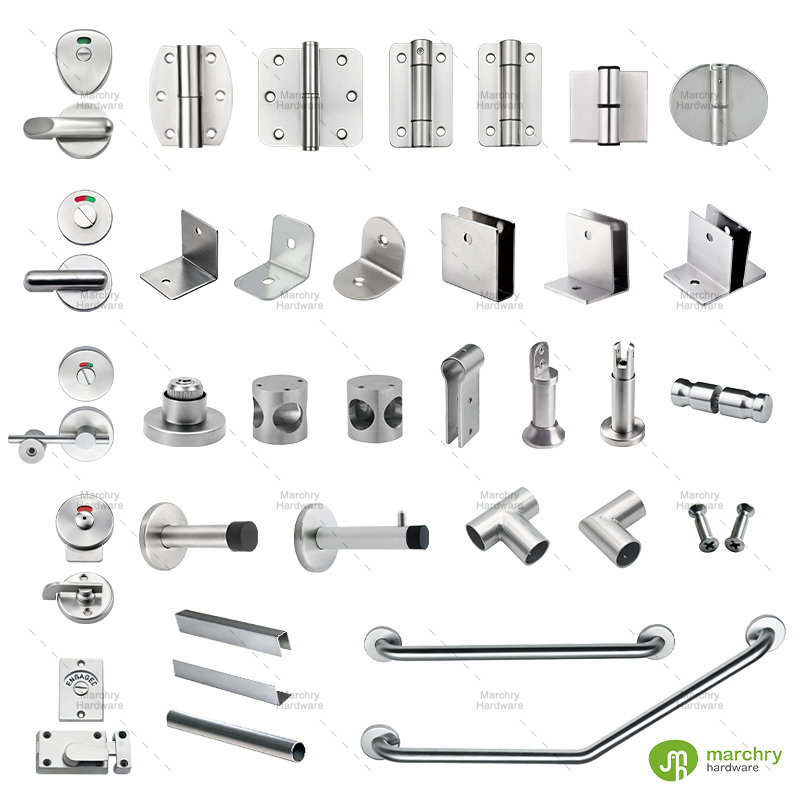
Commercial vs Residential Door Hardware: What’s the Difference?
When selecting door hardware, it’s essential to understand that commercial and residential applications have very different requirements. From durability and design to security and compliance, choosing the right door handle for your project can impact both performance and safety.
Whether you are an architect, contractor, or distributor, knowing these differences helps you specify the correct hardware for each setting. This guide explains the main distinctions between commercial and residential door hardware, focusing on materials, functionality, and standards.
Understanding Commercial Door Hardware
Commercial door hardware is engineered for high-traffic environments—such as offices, hospitals, schools, hotels, and retail stores—where doors are used hundreds of times a day.
Key Characteristics:
-
-
Heavy-Duty Construction:
Built from stainless steel, brass, or zinc alloy for long-lasting durability and corrosion resistance. -
Higher Security Standards:
Meets commercial-grade requirements such as ANSI/BHMA Grade 1 or Grade 2, ensuring reliability and protection. -
Accessibility and Compliance:
Must follow ADA (Americans with Disabilities Act) standards, meaning lever door handles must be easy to operate with minimal force. -
Fire-Rated and Tested:
Often certified for fire safety, ensuring the hardware performs under extreme conditions. -
Functional Variety:
Includes mortise locks, panic bars, and heavy-duty hinges designed for frequent operation.
-

Understanding Residential Door Hardware
Residential door hardware focuses on aesthetics and comfort for homes, apartments, and private spaces. While durability is still important, design and finish take priority over industrial-level performance.
Key Characteristics:
-
-
Aesthetic Variety:
Offered in a wide range of finishes—such as brushed nickel, matte black, and antique brass—to match interior design styles. -
Standard Durability:
Meets ANSI/BHMA Grade 3 standards, suitable for moderate use in households. -
Simplified Functionality:
Includes passage sets, privacy locks, and dummy handles that are easier to install and replace. -
Compact Design:
Lighter weight for wooden or interior doors, prioritizing smooth operation and comfort. -
Cost-Effective:
Typically more affordable due to simpler mechanisms and lighter materials.
-
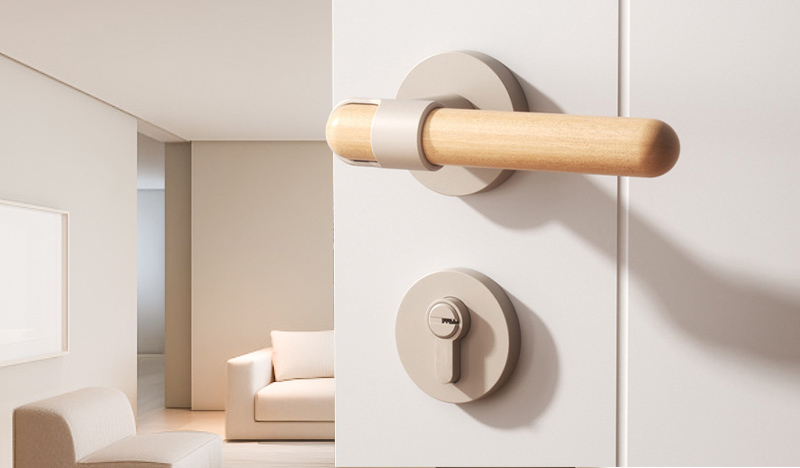
Commercial vs Residential Door Handles: Key Comparison
| Feature | Commercial Door Handle | Residential Door Handle |
|---|---|---|
| Durability | Heavy-duty, stainless steel construction | Medium-duty, decorative finishes |
| Usage Frequency | Designed for high-traffic environments | Ideal for low-traffic household use |
| Compliance | Meets ADA, fire-rating, and ANSI Grade 1–2 standards | Meets ANSI Grade 3 standards only |
| Design Focus | Function and safety | Style and comfort |
| Cost | Higher initial investment | More budget-friendly |
In short, commercial door handles are built to last, while residential door handles are built to complement. Selecting the right one depends on usage intensity, safety standards, and design requirements.
Material and Finish Considerations
When choosing door hardware for any project, material selection is crucial.
-
-
Stainless Steel: Preferred in commercial settings for its strength and corrosion resistance.
-
Zinc Alloy: Common in residential handles for flexibility in shapes and finishes.
-
Brass: Offers an upscale look with excellent durability for both sectors.
-
Finishes like satin stainless steel, matte black, or brushed gold can also align with architectural styles—industrial, contemporary, or classic.
Choosing the Right Door Hardware for Your Project
When specifying door hardware for a project, consider:
-
-
Traffic volume – How often the door will be used.
-
Security level – Whether it needs to comply with building codes.
-
Environmental factors – Exposure to humidity, salt, or chemicals.
-
Aesthetic needs – How the hardware complements the overall design.
-
A well-selected door handle enhances safety, improves user experience, and contributes to the building’s professional impression.
Conclusion: Function Meets Design
The difference between commercial and residential door hardware lies not just in function but also in purpose. Commercial hardware prioritizes performance, safety, and longevity, while residential hardware emphasizes comfort, appearance, and ease of use.
For architects, builders, and facility managers, understanding these distinctions ensures each project meets both operational and aesthetic goals.
Looking for high-quality door handles for your next project?
Explore our full range of commercial-grade and residential door hardware—crafted from premium materials and designed for lasting performance.
Contact our team today to request a product catalog or technical consultation.
MARCHRY HARDWARE
WEBSITE: www.marchry.com
MAIN PRODUCTS: Door handle, Door knob, Pull handle, Door stopper, Door lock, Toilet partition hardware, Furniture handle, etc.