Solid vs Hollow Door Handles: Load Capacity & Service Life Difference

Solid vs Hollow Door Handles: Load Capacity & Service Life Difference

Selecting qualified door handles is an essential part of home renovation, hotel decoration and commercial construction projects. Most consumers and purchasers tend to judge door handles merely by surface design, color finish and selling price, while overlooking the internal structural difference between solid and hollow construction.
The inner structure directly decides overall strength, pressure resistance, anti-wear performance and how many years the door handle can serve you safely. Solid and hollow door handles deliver totally different performance under daily pushing, pulling and twisting force. Understanding their gaps in load capacity and service lifespan helps you make a cost-effective and long-lasting buying decision, and avoid frequent replacement and maintenance troubles in the future.

Basic Structure Difference

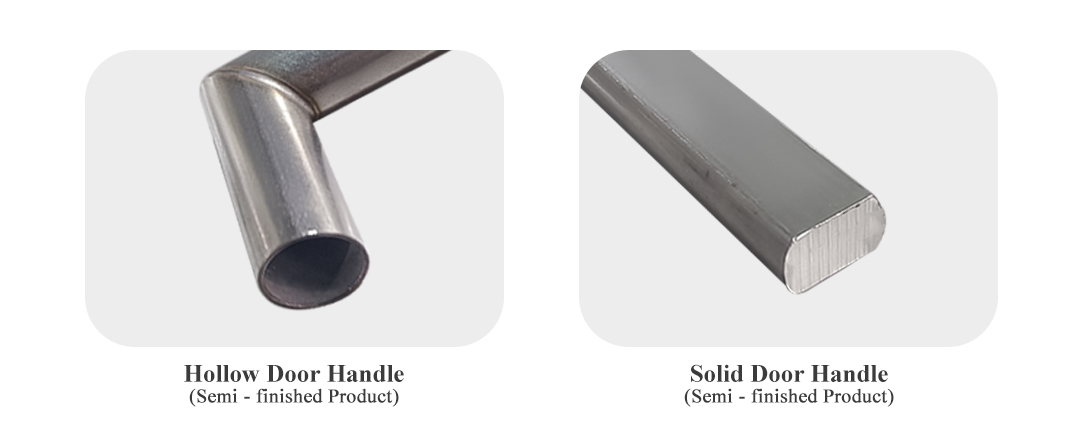
  • Hollow Door Handle: Hollow door handles are produced with hollow tubular metal pipes. Only the outer metal wall forms the main body, and the interior remains completely empty without any supporting structure. This lightweight design effectively cuts down raw material consumption and production cost. The structural strength mainly relies on the thickness of outer pipe wall, and the hollow inner part cannot share bearing pressure when the handle bears external pulling and twisting force.
  • Solid Door Handle: Made of solid forged or cast metal material. The whole body has dense metal structure with strong integral rigidity. Common solid handle materials include stainless steel, zinc alloy and brass, all maintaining stable physical properties after forming.
Load Bearing Capacity Comparison

Solid door handles feature outstanding torsion resistance and bending resistance. They can withstand frequent pulling, pushing and heavy force impact. Perfect for heavy entrance doors, thick wooden doors and high-traffic commercial doors without easy deformation.
Hollow door handles have limited pressure tolerance. Excessive force pulling or twisting will easily cause bending, skew and structural damage. They cannot match heavy weight door panels.

Service Lifespan Gap

Solid Door Handle:Solid construction boasts excellent bending resistance and torsion resistance. The compact metal structure can evenly disperse external force to every part of the handle. It can endure strong pulling, frequent daily operation and accidental violent impact. Even equipped on heavy solid wood doors, thick security entrance doors and heavy villa gate panels, solid handles will not deform easily. The connecting base and grip keep firm linkage, no shaking or deflection occurs after long-time heavy load use.

Hollow Door Handle:Hollow tubular structure has obvious limitations in load bearing. All pressure concentrates on the thin outer pipe wall. Once suffering excessive twisting force or heavy pulling, the pipe wall is prone to permanent bending and distortion. When installed on heavy doors, the handle will gradually tilt out of alignment after repeated use. Serious stress damage may even cause the handle to separate from the mounting base, bringing hidden safety hazards during daily access.

Adaptable Application Scenarios

Choose the right handle structure based on door weight, using frequency and using environment.

Recommended Occasions for Solid Door Handles

  • Family anti-theft entrance doors, heavy villa courtyard doors
  • High-frequency used bedroom doors, living room connecting doors
  • Hotel guest rooms, office rooms, school classroom doors
  • Public commercial spaces, hospital and supermarket passage doors
  • Humid indoor and semi-outdoor doors needing high corrosion resistance

Suitable Occasions for Hollow Door Handles

  • Lightweight thin interior wooden doors inside houses
  • Infrequently used storage room doors, attic doors
  • Temporary decoration projects and low-budget simple renovation
  • Low-traffic spare rooms with few daily access

Conclusion

Solid door handles stand out in load capacity and long durability, ideal for heavy-duty and frequent use occasions. Hollow handles own cost advantages and fit light doors. Select door handle structure according to door weight and usage frequency for cost-effective and durable installation.


Looking for a stainless steel door hardware OEM manufacturer?
Contact us today to explore custom door hinge solutions for your residential or commercial projects.


 MARCHRY HARDWARE

WEBSITE: www.marchry.com

MAIN PRODUCTS: Door handle, Door knob, Pull handle, Door stopper, Door lock, Toilet partition hardware, Furniture handle, etc.

Related Post

What Is a Hinge Cycle Test? A Complete Guide to Door Hinge Durability Testing

What Is a Hinge Cycle Test? A Complete Guide to Door Hinge Durability Testing Door hinges are one of the most frequently used components in residential, commercial, and industrial buildings. Every opening and closing action puts stress on the hinge, which directly affects its lifespan and performance. A hinge cycle test is a professional durability test used to measure how many opening and closing cycles a door hinge can withstand before showing signs of wear or failure. In this article,

2026 Commercial Stainless Steel Door Hardware Guide: How to Choose Durable Options for Commercial Projects

2026 Commercial Stainless Steel Door Hardware Guide: How to Choose Durable Options for Commercial Projects If you’re an architect, general contractor, project manager, or commercial property owner, you already know one critical detail that makes or breaks a building’s functionality: commercial door hardware. Far more than a decorative accessory, high-quality door hardware directly impacts safety, daily usability, maintenance costs, and long-term durability for high-traffic spaces like office buildings, hotels, shopping malls, hospitals, and coastal commercial properties. In 2026, the global

Door Handle Inserts: Which Material Is Best — Brass, Stainless Steel, Iron, or Aluminum?

Door Handle Inserts: Which Material Is Best — Brass, Stainless Steel, Iron, or Aluminum? When manufacturing or sourcing door handles, the insert material plays a critical role in durability, strength, corrosion resistance, and long-term performance. While the outer appearance of a handle may look similar, the internal insert structure determines its real service life. In this guide, we compare brass, stainless steel, iron, and aluminum inserts to help manufacturers, contractors, and distributors choose the most suitable solution.   What Is

What Is a Concealed Hinge and Where Is It Used?

What Is a Concealed Hinge and Where Is It Used? A Manufacturer’s Guide to Modern Door Hinges As modern architecture continues to favor clean lines and minimal design, concealed hinges have become an increasingly popular choice in door hardware systems. Unlike traditional exposed hinges, concealed hinges are hidden from view when the door is closed, offering both functional and aesthetic advantages. From a door hinge manufacturer’s perspective, concealed hinges represent a combination of precision engineering, material strength, and customization capability.

Scroll to Top