Common Confusion from Buyers

5 Key Reasons for High Custom Sampling Cost
① Exclusive Custom Mold Development Is Non-reusable
-
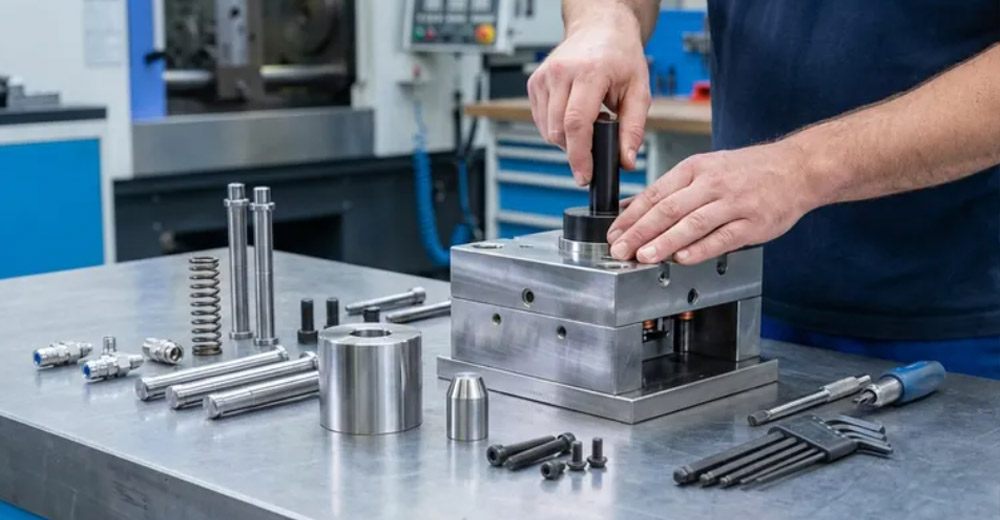
- Non-standard customized hardware cannot use existing general molds. A brand-new mold must be manufactured:
Molds for stamping, die casting, CNC forming require mold steel (SKD11, H13, Cr12), CNC programming, wire cutting, heat treatment, finishing and trial adjustment. Both raw material and skilled labor cost are expensive. - This mold is customized only for your product, unavailable for other clients’ orders. Therefore, the full tooling expense must be covered by your project.
- Non-standard customized hardware cannot use existing general molds. A brand-new mold must be manufactured:
② Low-volume Trial Run Causes High Hourly Machine & Labor Cost
For sampling with only several or dozens of pieces:
-
- A long time is spent on machine setup, fixture installation, dimension calibration and parameter adjustment;
- Senior technicians supervise the whole trial process, conduct first-piece inspection and repeated fine-tuning. All labor time is counted into a tiny number of samples.
Small-batch processing factories also charge extra setup fees for CNC machining, PVD coating and polishing, pushing up the unit sampling price.
③ High Raw Material Waste Rate
-
-
- Mass production uses whole steel bars or steel coils, with leftover material reusable for future orders.
- Sampling only needs a small amount of raw material. Remaining scraps after cutting can hardly be reused, so all waste cost is included in sample charges.
-
④ Separate Scheduling for Surface Finishing & Testing
⑤ Included Technical Service Fee
Complete One-Time Mold Fee Industy Rules
Rule 1: Mold Ownership
- Standard Rule: After full mold payment, the mold belongs to you. The factory keeps the mold safely on your behalf. No repeated mold fees will be charged for repeat orders later, and the factory is prohibited from producing identical products for other customers with your exclusive mold.
- For standard existing hardware sizes: No new mold required, only sample processing fee needed.
Rule 2: Mold Cost Refund Policy (Most Popular for Foreign Trade)
- Refund after reaching agreed order quantity (e.g. 5,000pcs / 10,000pcs): full mold fee will be returned or deducted from your first mass order payment.
- Refund upon reaching accumulated order amount. Factories absorb tooling costs via mass production profits to support long-term partners.
Rule 3: One-time Charge, Lifetime Usage
Normal stainless steel stamping molds can sustain tens of thousands of shots, supporting long-term stable supply.
Rule 4: Charges for Mold Maintenance & Modification
- Natural wear and tear during regular production: routine maintenance and simple mold repair are free of charge for customers.
- If you actively revise drawings, sizes or product structures: modification or re-molding fees will apply accordingly.
- If no order is placed for more than half a year, a small mold storage fee may apply, which can be negotiated to be waived in advance.
Rule 5: Non-refundable Scenarios for Mold Cost
- Only sampling is completed without subsequent mass production orders. Custom exclusive molds cannot be resold to others, so tooling fees cannot be refunded.
- You unilaterally cancel the order after mold manufacturing is finished; full agreed mold payment shall still be settled.
Clear Distinction: Mold Fee VS Sample Processing Fee
- Mold/Tooling Fee: One-time fixed development cost, eligible for refund when order volume meets requirements.
- Sample Processing Fee: Covers raw material, machining and surface finish cost for samples. This is production consumption and normally non-refundable.
Factories may waive sample fees for large bulk orders, which is different from mold refund.
Money-saving Yips for Custom Hardware Purchasers
- Prioritize factory standard sizes whenever possible to completely save mold costs.
- Finalize drawings fully confirmed before mold making to avoid extra modification fees caused by later revisions.
- Negotiate reasonable refund quantity based on your actual sales volume to match your procurement capacity.
- For long-term cooperation, discuss shared mold cost between you and the factory to reduce your upfront investment.
Conclusion
High sampling price mainly comes from exclusive custom mold investment, independent machine setup labor and small-batch processing premium.
One-time mold charging is a mature industry rule. Once paid, you own the mold right, and the tooling charge can be fully refunded upon reaching the agreed order volume, which brings excellent cost performance for long-term cooperation.
Formal original hardware factories provide detailed cost breakdowns, with mold lifespan, ownership and refund terms written clearly in the contract to protect both parties’ interests.
Looking for a stainless steel door hardware OEM manufacturer?
Contact us today to explore custom door hinge solutions for your residential or commercial projects.
MARCHRY HARDWARE
WEBSITE: www.marchry.com
MAIN PRODUCTS: Door handle, Door knob, Pull handle, Door stopper, Door lock, Toilet partition hardware, Furniture handle, etc.