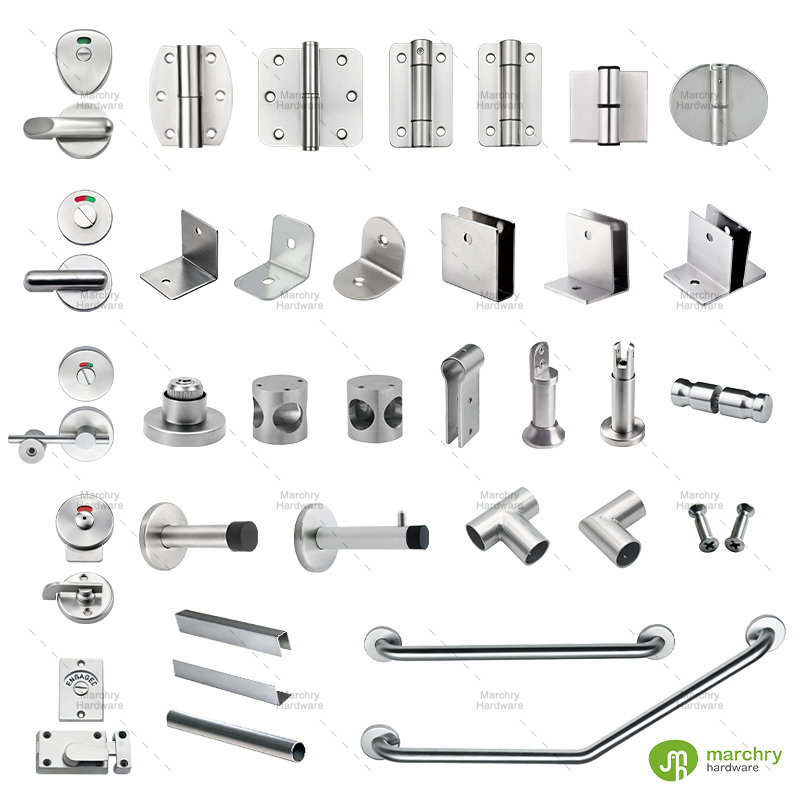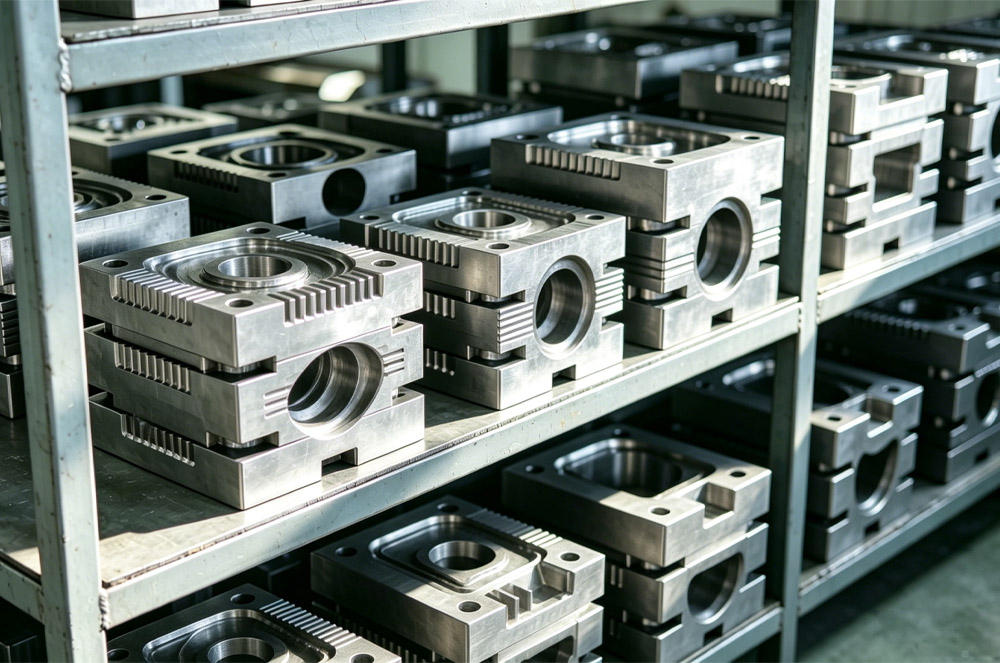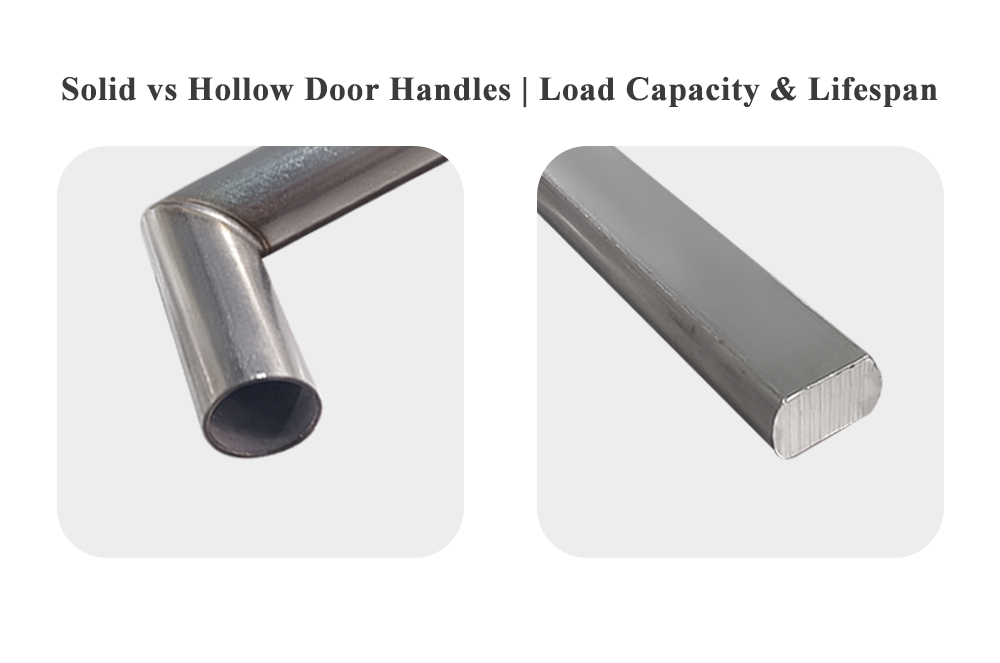
When supplying door handles and lever sets to the European market, EN 1906 is the core product standard that every hardware manufacturer, importer, architect and contractor must understand. It defines the performance requirements, testing methods and classification codes for door handles, lever handles, knobs and their associated backplates for building doors. Compliance with EN 1906 is a fundamental requirement for CE marking for many door hardware products sold within the EU and EEA.
Many overseas buyers ask: What does the EN 1906 code mean? How do we verify if a door handle meets EN 1906? What tests are included? This guide breaks down the standard clearly for your project procurement.

What is EN 1906?
EN 1906 is the European harmonised standard for building hardware – Lever handles and knob furniture for doors.
It applies to:
- Lever door handles (including your knurled lever handles)
- Door knobs
- Backplates, roses and mounting accessories paired with handles
- Handles for interior and exterior hinged building doors
It does NOT cover:
- Window handles
- Cabinet furniture handles
- Emergency exit hardware (covered by EN 179 / EN 1125)
- Sliding door pull handles
The standard sets mechanical performance criteria, test procedures and marking rules. Products successfully tested to EN 1906 can use the results to support CE marking under the Construction Products Regulation (CPR).
EN 1906 Classification Code – The 7-Digit Code
This is the most important part buyers look for. Every certified door handle gets a 7-group classification code like 3 7 4 0 1 3 0. Each number represents one performance attribute.
| Position | Category | Description | Common values |
|---|---|---|---|
| 1 | Category of use | Intended usage environment | 3 = Heavy duty (commercial, high traffic: hotel, office, public building)
2 = Medium duty (residential, low traffic) |
| 2 | Durability | Number of opening/closing cycles | 7 = 200,000 cycles (commercial grade)
6 = 100,000 cycles (residential) |
| 3 | Door mass | Max door weight the handle system supports | 4 = up to 100 kg door
3 = up to 80 kg door |
| 4 | Fire resistance | Fire door suitability | 0 = Not for fire doors
1 = Suitable for fire doors |
| 5 | Safety | Safety against injury | 1 = Standard safety |
| 6 | Corrosion resistance | Salt spray anti-corrosion performance | 3 = High corrosion resistance (exterior, humid, coastal)
2 = Moderate corrosion resistance (indoor) |
| 7 | Security | Resistance to forced entry | 0 = No security requirement (normal interior door)
1 = Basic security |
Example: 3 7 4 0 1 3 0
Heavy use, 200k cycles, up to 100kg door, non-fire door, standard safety, high corrosion resistance, basic security. Ideal for hotel and commercial interior doors.
Key Tests Required by EN 1906
Our factory performs these tests in-house or with notified bodies to achieve EN 1906 certification:
-
- Durability cycle test: Repeated opening and closing up to 200,000 cycles. No loose connection, deformation or function failure allowed.
- Static load test: Apply vertical and horizontal force on the handle to check bending and fixing strength.
- Torque test: Test twisting resistance of the lever to avoid breakage under force.
- Corrosion test (salt spray test): Verify anti-rust performance for indoor / coastal outdoor environments.
- Endurance and impact test: Simulate rough usage in public areas.
EN 1906 & CE Marking
EN 1906 is a harmonised standard under CPR.
-
- If your door handle is for fire doors, EN 1906 compliance plus notified body assessment is mandatory for CE.
- For ordinary non-fire interior door handles, EN 1906 testing is widely requested by European architects, distributors and project buyers even when not legally forced.
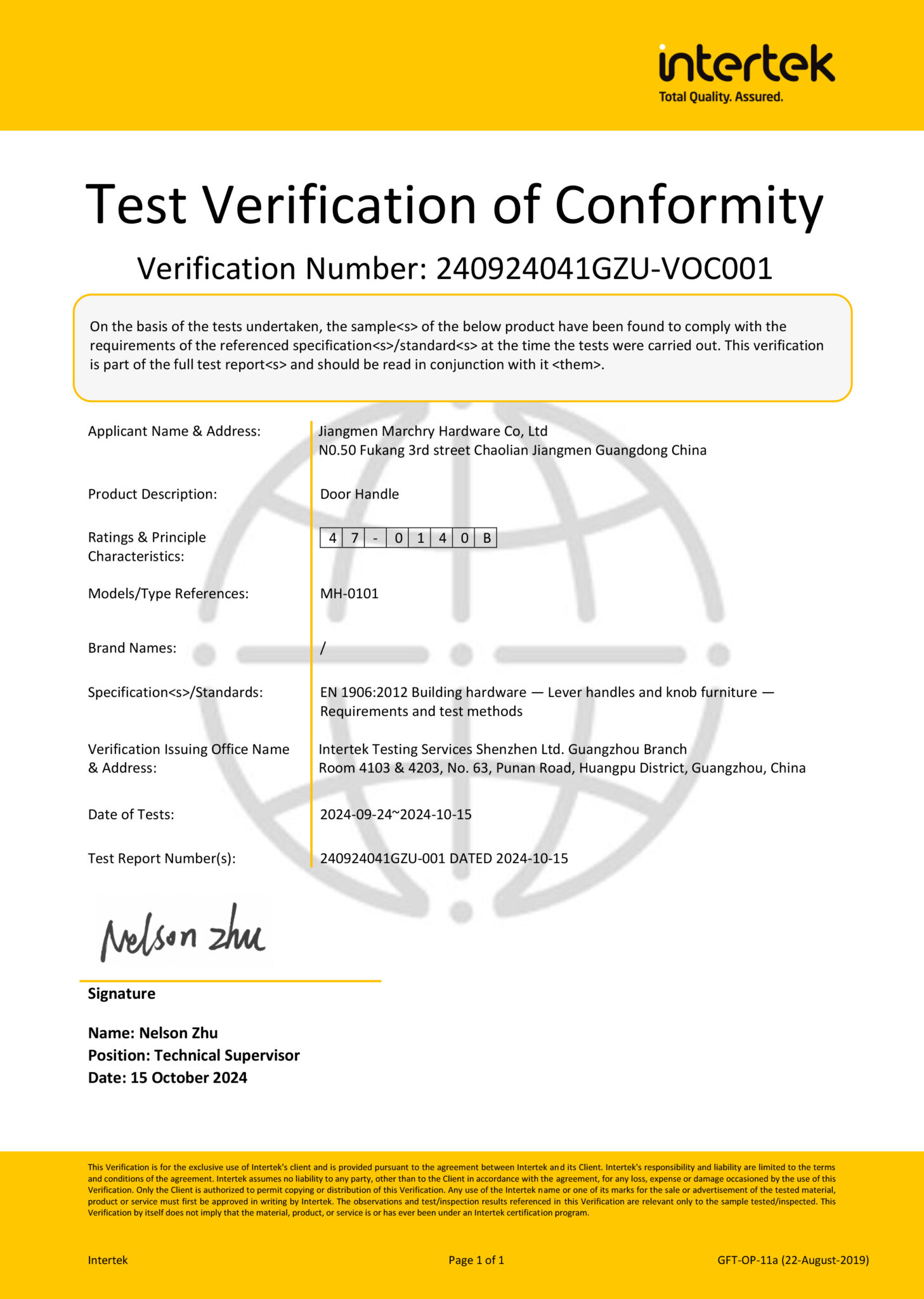
- Buyers should always ask for test reports and check the classification code, not just a simple “EN1906 certified” statement.
Why European Project Buyers Prioritise EN 1906 Door Handles
-
- Meets local building code requirements for commercial and residential projects
- Reduces liability risk for architects, contractors and importers
- Consistent quality benchmark across EU countries
- Critical tender requirement for hotel, apartment and public building bids
- Clear quality specification, easier for B2B buyers to compare suppliers
Conclusion
EN 1906 is the baseline specification for door lever handles sold in Europe. Understanding its 7-class code helps you quickly select the right hardware for residential, commercial, coastal or fire door projects.
As a professional door handle manufacturer, we provide EN 1906 tested lever handles, including knurled handles, matte black, brushed stainless steel and antique brass finishes. We can supply full test reports for your European construction and distribution projects.
Looking for a stainless steel door hardware OEM manufacturer?
Contact us today to explore custom door hinge solutions for your residential or commercial projects.
MARCHRY HARDWARE
WEBSITE: www.marchry.com
MAIN PRODUCTS: Door handle, Door knob, Pull handle, Door stopper, Door lock, Toilet partition hardware, Furniture handle, etc.