🎨 A Guide to Stainless Steel Coloring: From Water Plating to PVD
Introduction
Stainless steel has long been valued for its corrosion resistance, strength, and clean appearance, making it a staple in construction, hardware, and commercial applications. But modern users are increasingly seeking aesthetic diversity—from colors to textures—through advanced surface treatments.
This article explains the most common stainless steel coloring methods, comparing their cost, finish, and use cases to help you make informed choices.
1.Electroplating / Water Plating
Electroplating is a traditional technique where a metal film is deposited onto the stainless steel surface through an electrochemical process. It’s widely used for small hardware components like handles, fasteners, and trims.
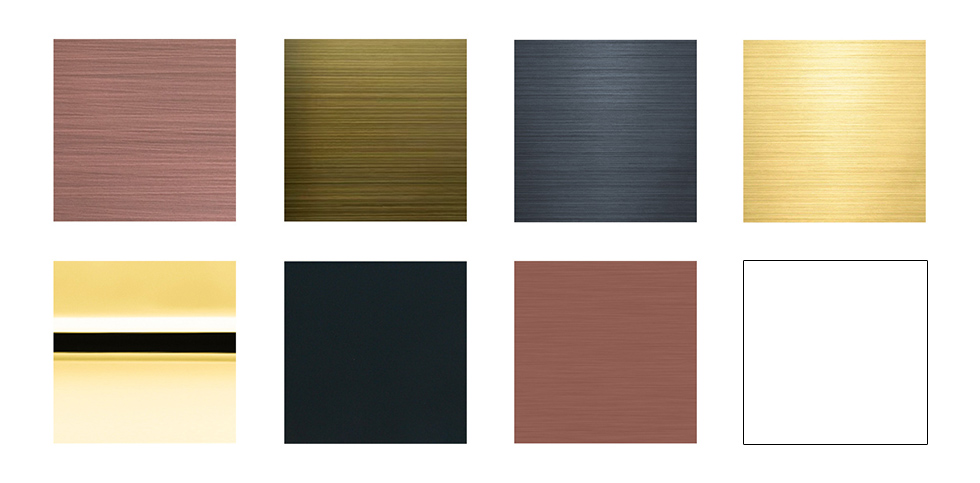
Water plating can produce a range of metallic tones such as gold, antique bronze, gun black, or rose gold, offering a shiny and decorative finish. While affordable, it may require additional protection for outdoor or humid environments.
2.PVD Coating
PVD coating is a high-end vacuum-based technique that deposits a strong and ultra-thin metal layer on stainless steel. It offers excellent scratch resistance, durability, and oxidation resistance, making it ideal for premium door hardware, bathroom fixtures, architectural features, and commercial interiors.
Popular PVD colors include black titanium, champagne gold, rose gold, and titanium gray. Though more expensive, it delivers unmatched quality and long-term value.
3.Powder Coating
Powder coating involves applying a dry powder to the stainless steel surface using electrostatic attraction, followed by heat curing. It allows for various textures such as matte, sand grain, rough surface, or patterns, and supports a broad range of color customizations.
It’s cost-effective and fingerprint-resistant, ideal for bulk orders, partitions, bathroom hardware, and commercial projects.
Comparison Table: Which Process Fits Your Needs?
| Process | Cost | Durability | Finish Appearance | Recommended Use |
|---|---|---|---|---|
| Electroplating | ★★☆ | ★★☆ | Bright metallic color, highly decorative | Small hardware, interior door handles |
| PVD Coating | ★★★★ | ★★★★ | Premium metallic texture, extremely durable | High-end door locks, bathroom hardware, commercial use |
| Powder Coating | ★★☆ | ★★★ | Rich matte or textured colors | Partition fittings, general hardware, bulk projects |
- If you value visual appeal and texture, PVD is your best choice.
- For budget-sensitive projects, powder coating offers the best cost-performance ratio.
- For small decorative components, electroplating remains a classic solution.
Pro Tip: What Else to Consider When Choosing a Finish?
- Installation environment (indoor/outdoor/humid) affects the need for corrosion resistance.
- Complex product structures benefit from powder coating or PVD to ensure even coverage.
- Color longevity is a key factor for high-end or commercial projects.
Final Thoughts
Surface finishing is not just technical—it’s also artistic. The right process gives stainless steel both durability and visual character.
MARCHRY HARDWARE
WEBSITE: www.marchry.com
MAIN PRODUCTS: Door handle, Door knob, Pull handle, Door stopper, Door lock, Toilet partition hardware, Furniture handle, etc.