The Production Process of Stainless Steel Precision Cast Door Handles: A Detailed Guide
Stainless steel precision cast door handles are widely used in various architectural projects and home decorations due to their durability, aesthetics, and high performance. Understanding their production process is crucial for ensuring the quality and performance of the product. In this article, we will provide a detailed overview of the production process of stainless steel precision cast door handles to help you fully understand this complex process.
1.Design and Mold Making
Design
Design is the first step in producing stainless steel precision cast door handles. Designers use 3D modeling software to create detailed designs based on customer requirements and usage scenarios, ensuring the door handle achieves optimal functionality and aesthetics.
Mold Making
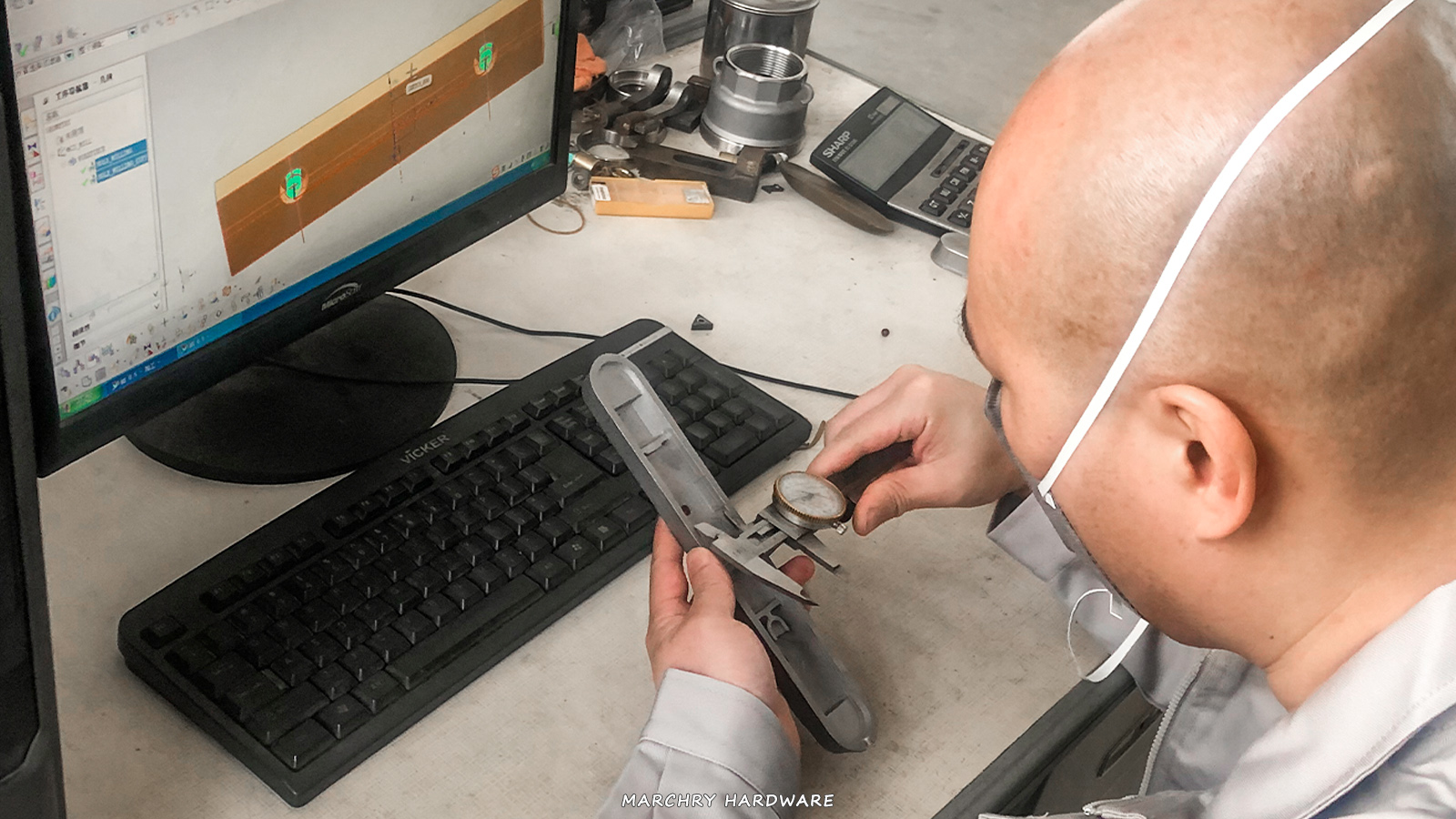
Based on the design model, wax molds and molds are produced. Usually, metal materials are used to make the molds to ensure their precision and durability. High-quality molds are crucial for ensuring the final quality of the door handle.
2.Wax Pattern Creation
Wax Injection
Liquid wax is injected into the mold and cooled to form a wax pattern. A precise and defect-free wax pattern is the foundation for ensuring the final quality of the stainless steel door handle.
Tree Assembly
Multiple wax patterns are assembled on a wax tree to facilitate the subsequent ceramic shell process. This step requires a high degree of precision to ensure that each wax pattern is correctly positioned during casting.
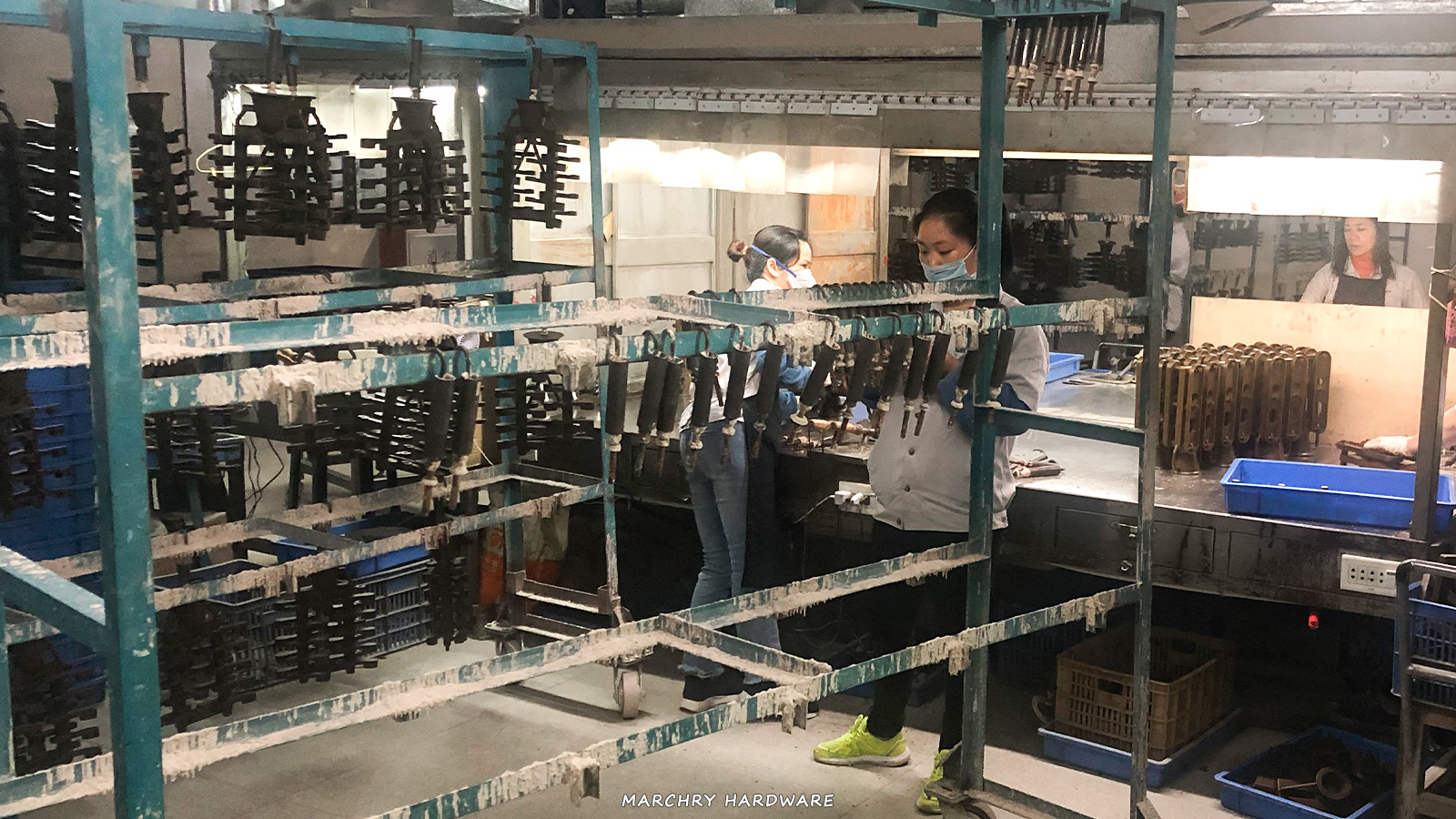
3.Ceramic Shell Creation
Slurry Dipping
The wax tree is dipped into a ceramic slurry, coating its surface with a layer of ceramic. This process is typically repeated multiple times, with sand sprinkling in between, to form a sufficiently thick ceramic shell.
Sand Sprinkling
A layer of fine sand is sprinkled on the wet ceramic layer to enhance the strength and heat resistance of the shell.
Drying
The prepared ceramic shell is dried to ensure it is fully hardened and ready for the next steps.
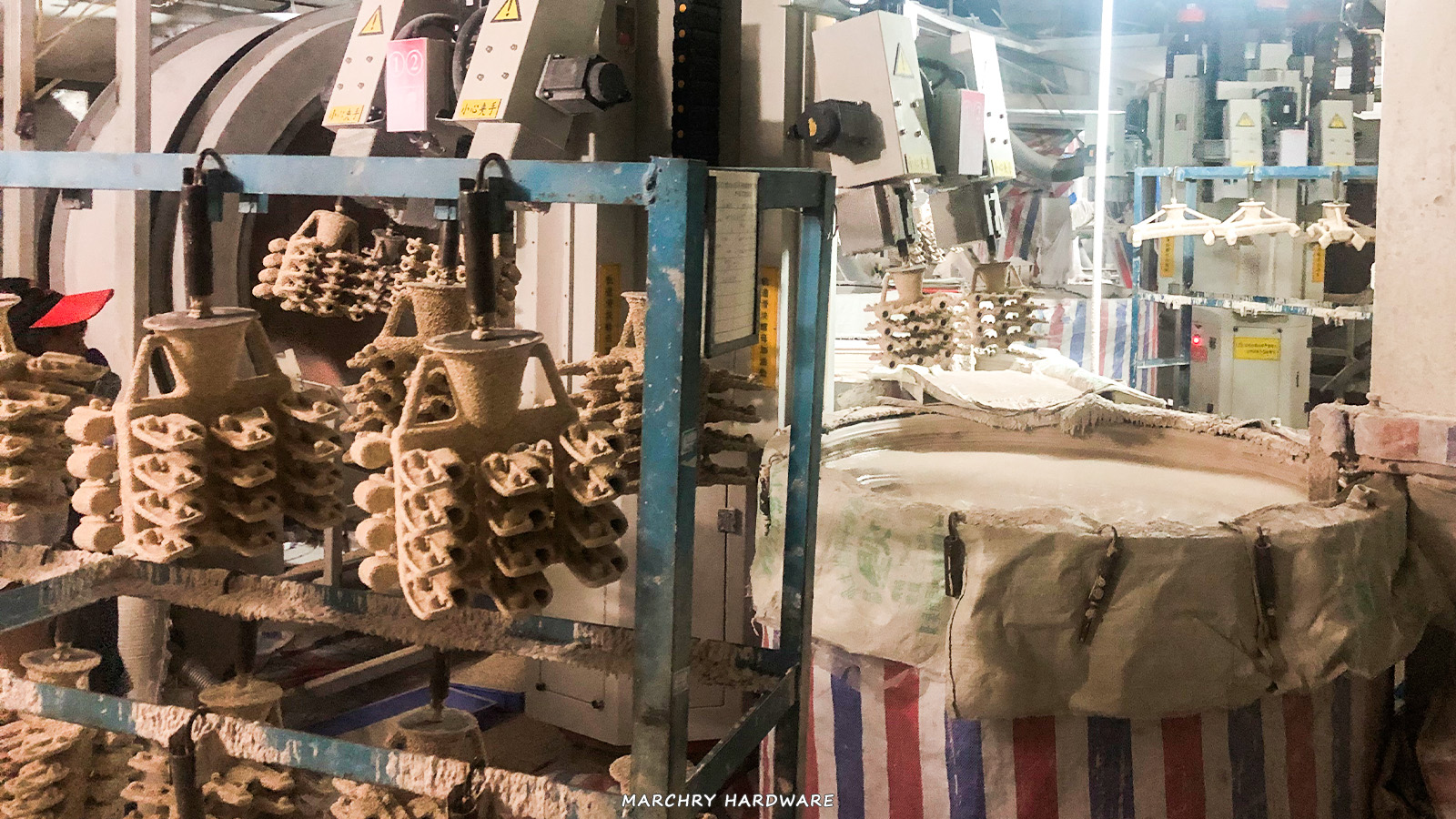
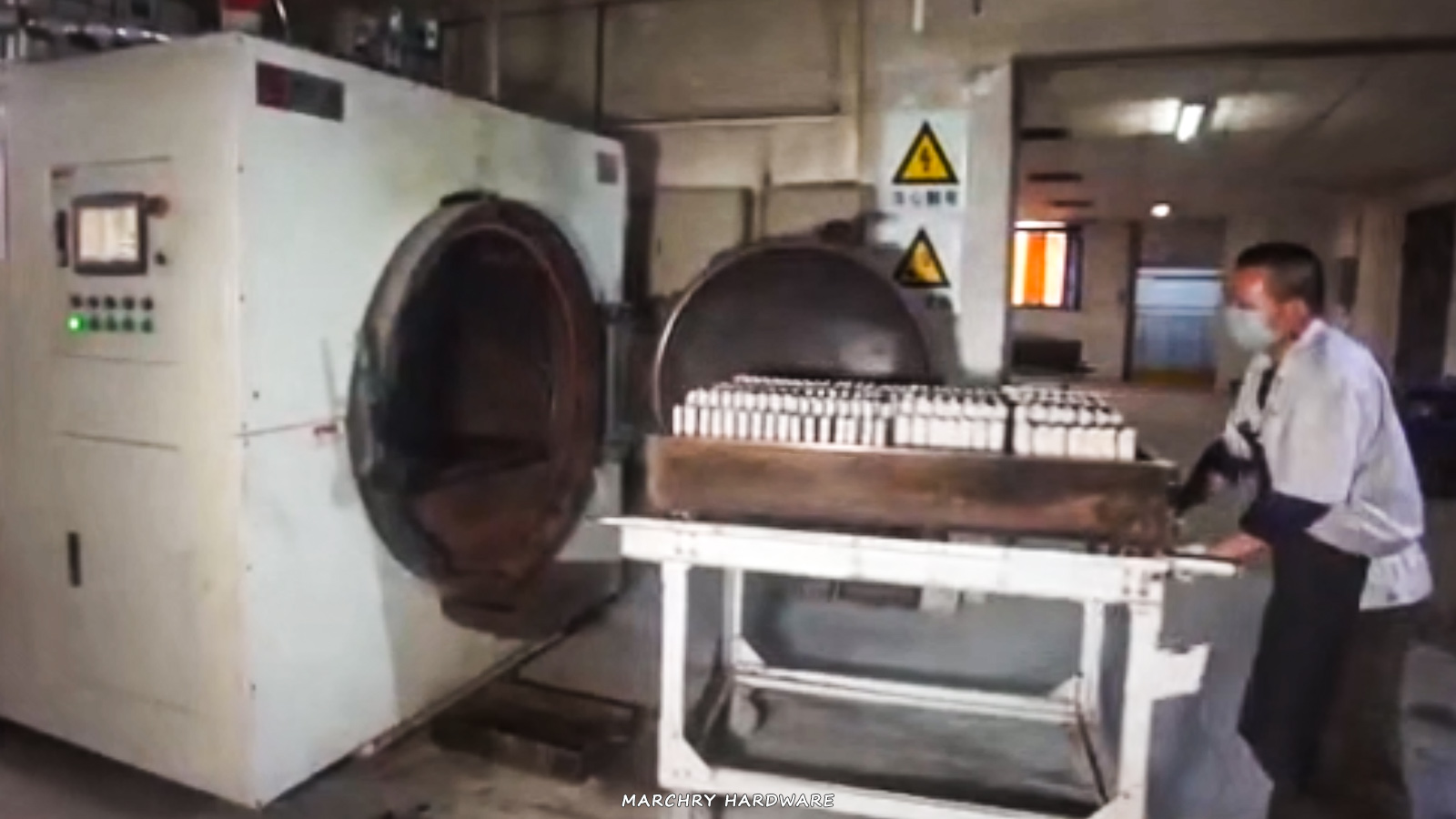
4.Wax Removal
Heating
The shell is heated to melt and remove the internal wax pattern, forming a hollow ceramic shell. This step requires strict temperature control to prevent the shell from cracking.
5.Casting
Preheating the Shell
The ceramic shell is heated to a certain temperature to avoid sudden temperature changes that could cause the shell to crack or deform.
Melting Stainless Steel
Stainless steel is heated to its melting point, turning it into liquid metal, ready for pouring.
Pouring
The liquid stainless steel is poured into the preheated ceramic shell, filling the entire mold cavity. This step needs to be quick and precise to ensure the quality and details of the door handle.
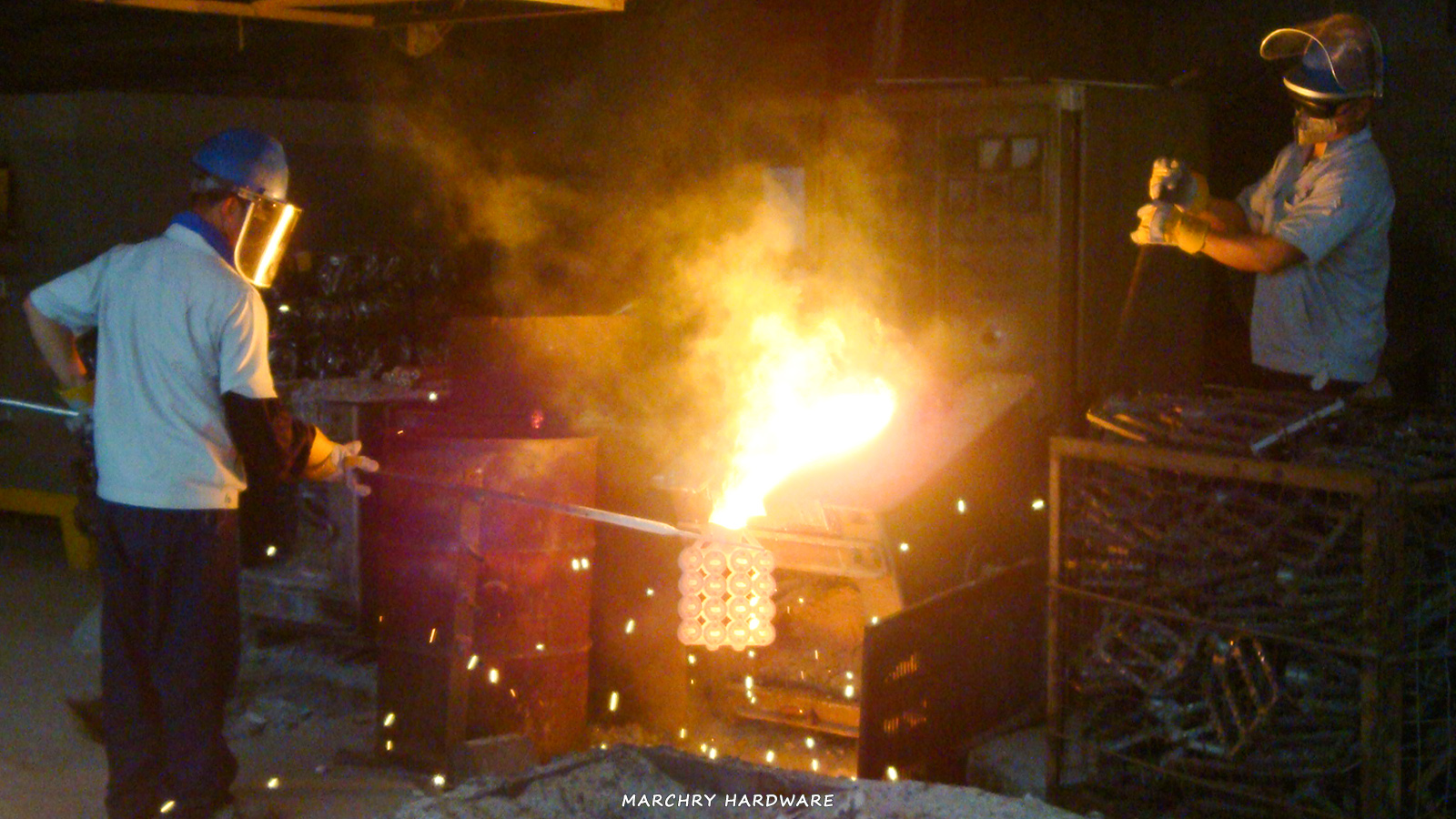
6.Cooling and Shell Removal
Cooling
The casting is allowed to cool naturally or with the aid of cooling equipment. During the cooling process, strict monitoring is necessary to prevent cracks or other defects in the casting.
Shell Removal
The ceramic shell is removed using mechanical or chemical methods to retrieve the stainless steel door handle casting.
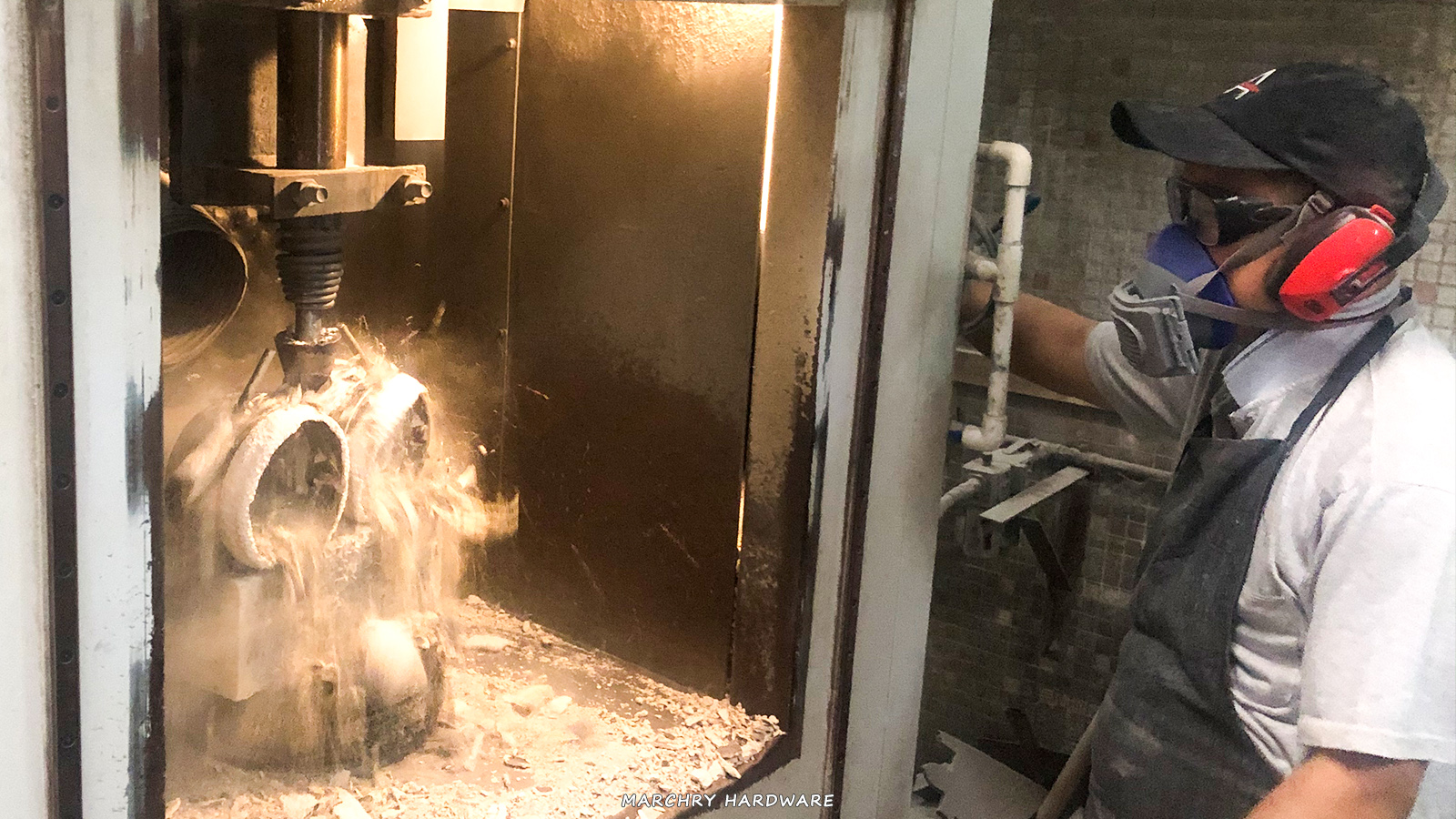
7.Post-Processing
Cutting
The gating system and excess parts are cut off to obtain a casting close to the final shape of the door handle.
Polishing and Grinding
The casting is surface-treated to remove oxidation layers and casting defects, ensuring surface smoothness and aesthetics.
Heat Treatment
Heat treatment is performed as needed to improve the mechanical properties of the casting, such as hardness and wear resistance.
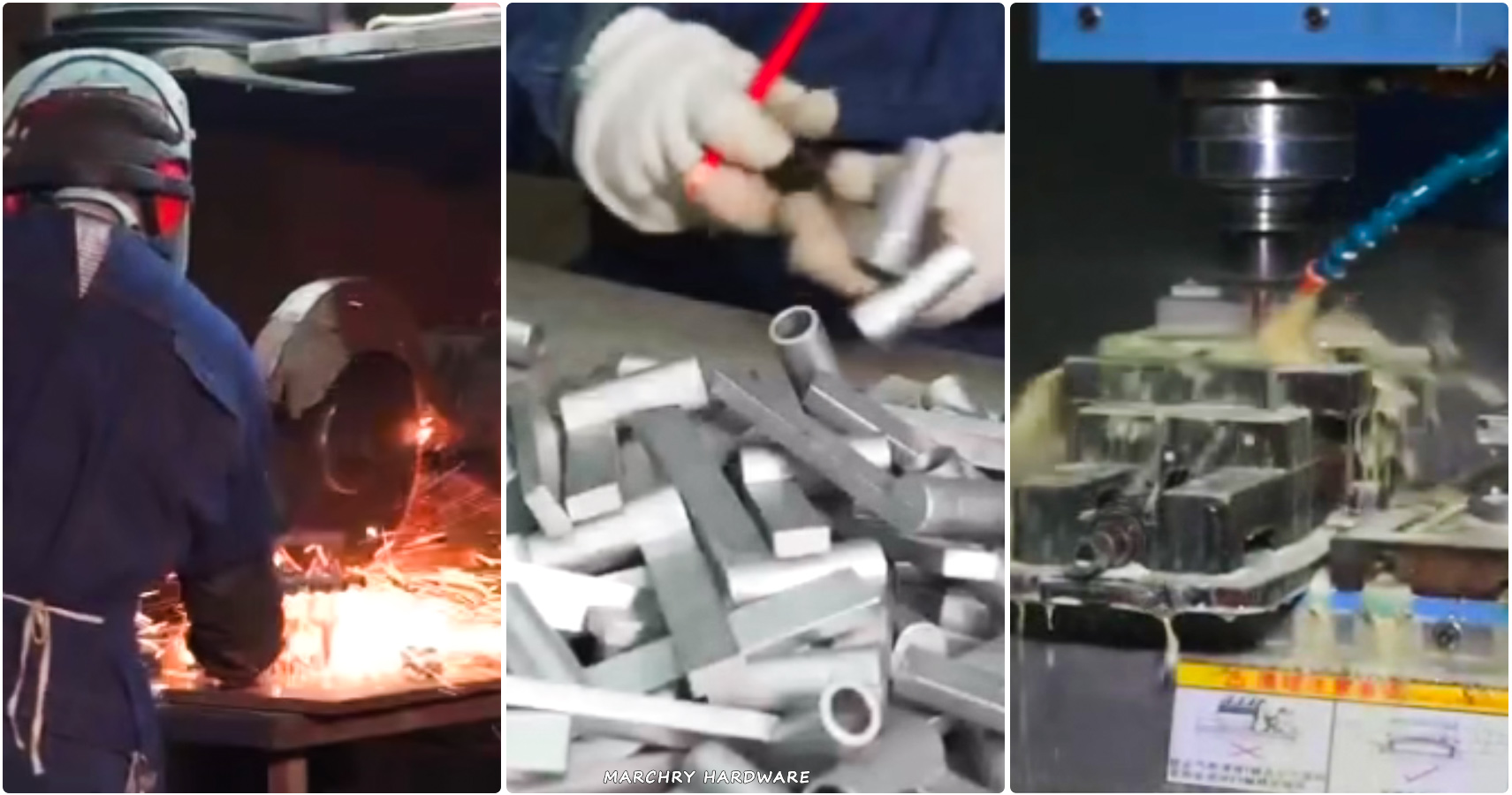
8.Final Machining and Assembly
Machining
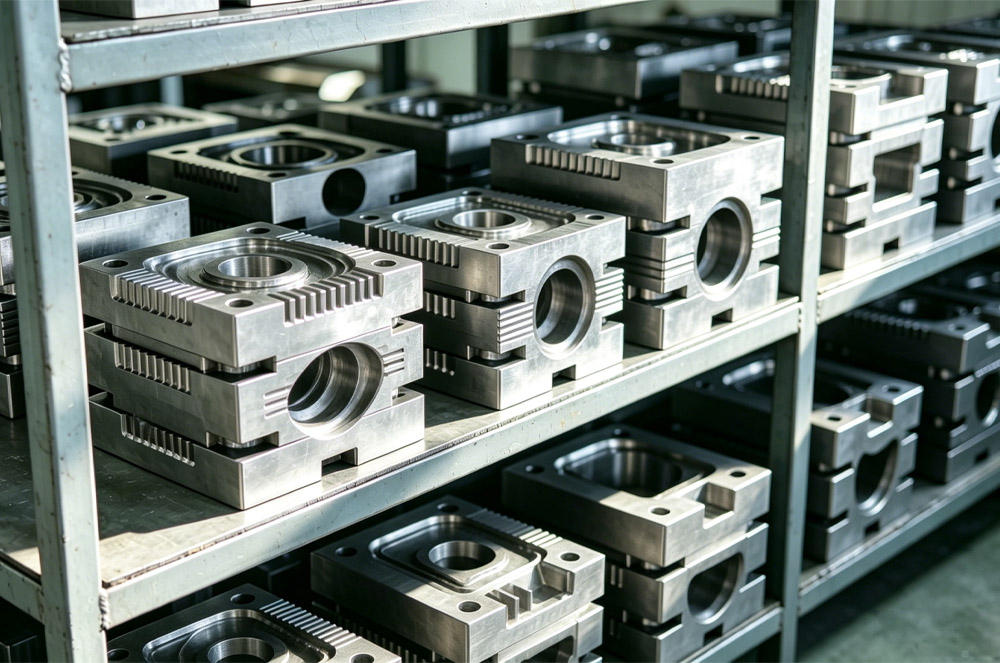
Further machining processes such as turning, milling, and drilling are performed to enhance the precision and functionality of the door handle.
Surface Treatment
Surface treatments such as electroplating or painting are applied to improve corrosion resistance and aesthetics.
Assembly
The door handle is assembled with other components to form the final product. This step requires confirmation of the tight fit of all parts to ensure the door handle’s longevity and safety.
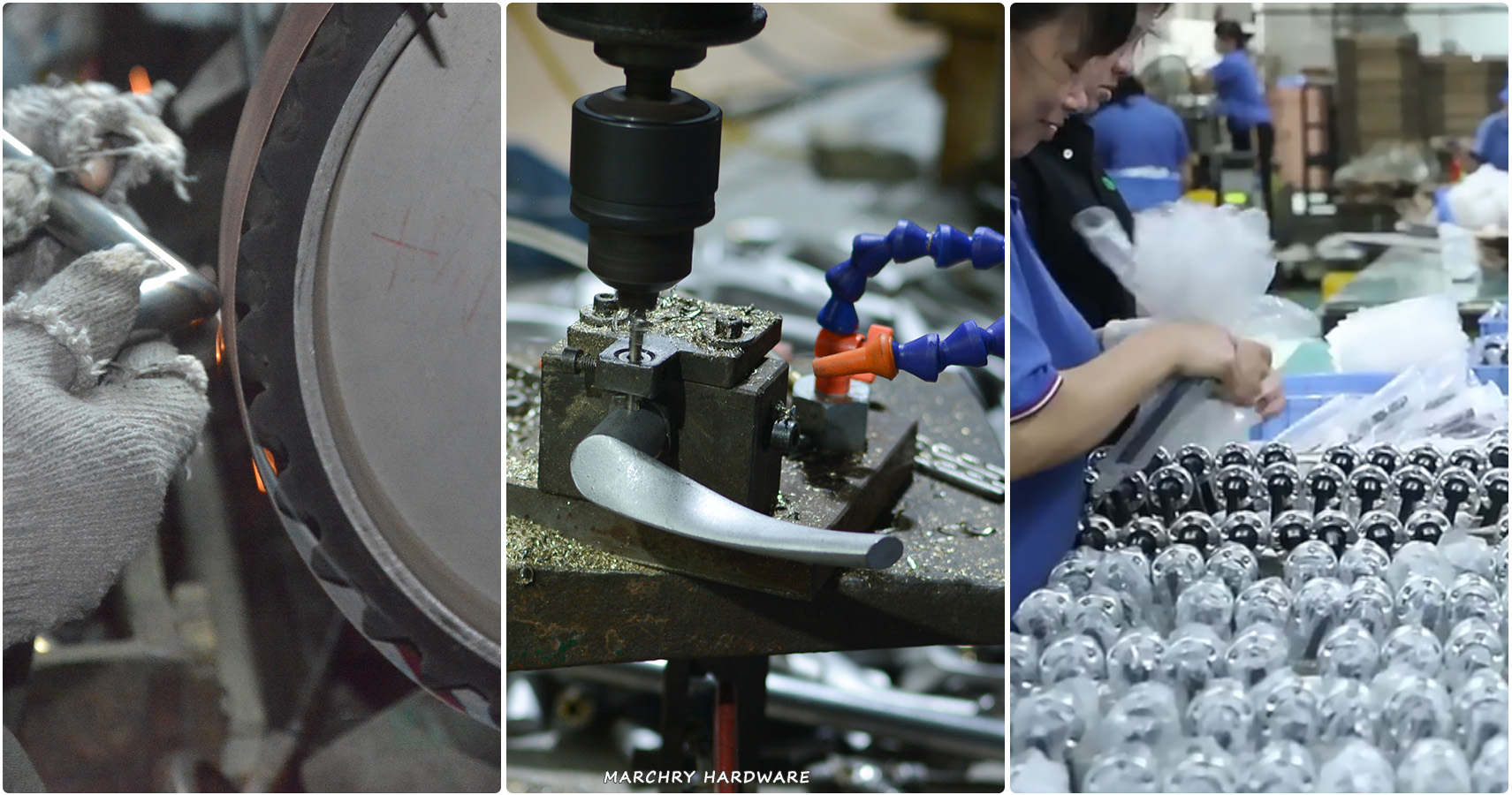
Through these detailed steps, the production of stainless steel precision cast door handles can achieve high quality and precision, meeting the requirements of various application scenarios. If you have any questions about the production process of stainless steel precision cast door handles or need more information, please feel free to contact us.
MARCHRY HARDWARE
WEBSITE: www.marchry.com
MAIN PRODUCTS: Door handle, Door knob, Pull handle, Door stopper, Door lock, Toilet partition hardware, Furniture handle, etc.